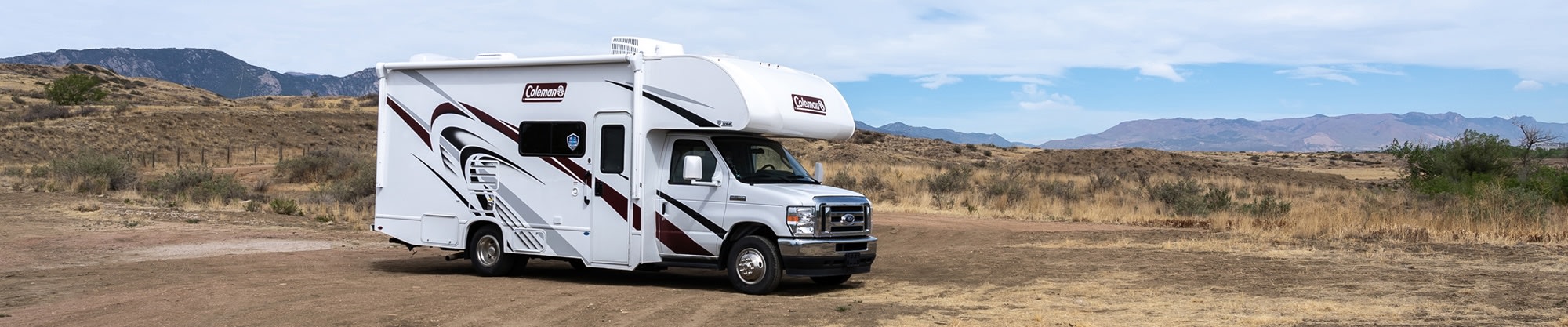

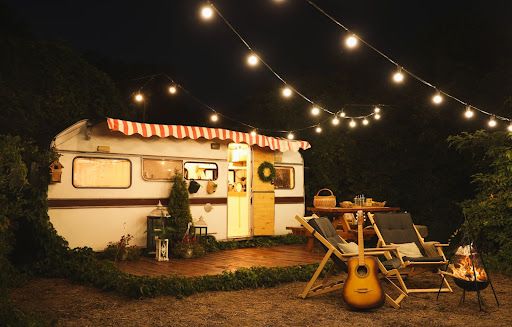
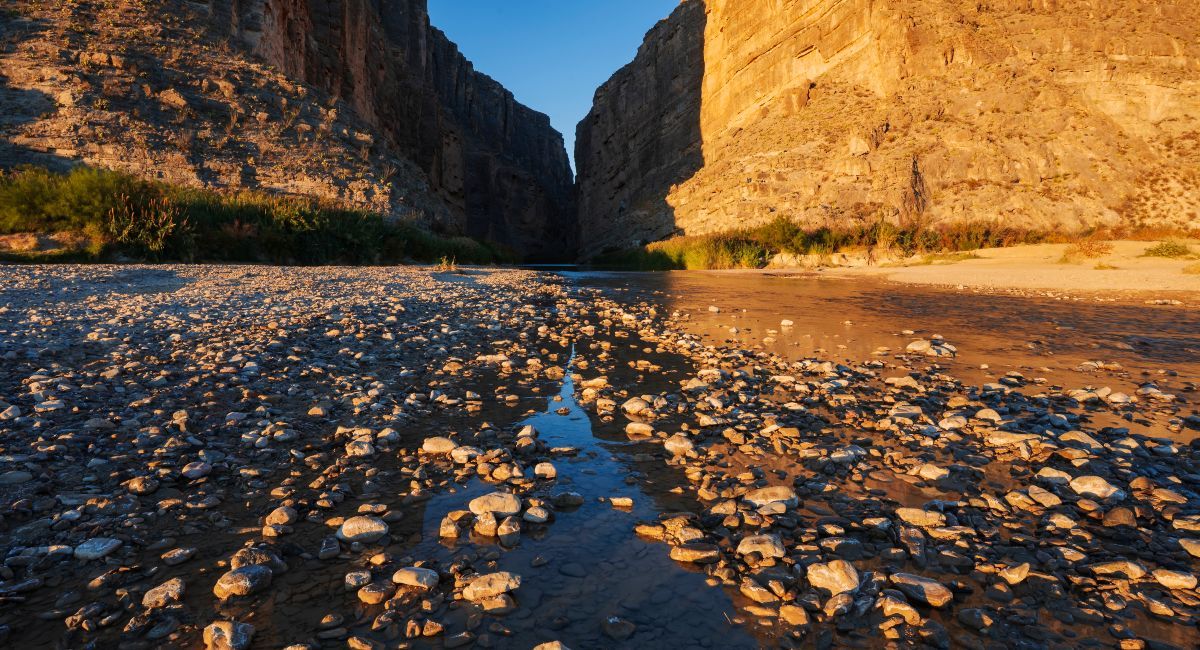
Big Bend is the kind of park where you check your fuel gauge more often than your phone. The nearest gas station outside the park is over 70 miles away in any direction, and cell service disappears somewhere around Marathon. Renters who don't top off at Panther Junction learn this the hard way — our support team fields more "I'm running on empty" calls from Big Bend than from any other park. That isolation is also the point. Eight hundred thousand acres of Chihuahuan Desert, a river border with Mexico, and the darkest night skies of any national park in the lower 48 — all in a corner of Texas most Texans have never visited.
TL;DR
- Big Bend has three NPS campgrounds: Chisos Basin (56 sites, 5,401 ft, 24-ft RV limit), Rio Grande Village (93 sites, 1,850 ft, 65-ft max), and Cottonwood (28 sites, closed May–October)
- Only Rio Grande Village RV Park (25 sites, full hookups, $36–46/night, 38-ft max) has electric, water, and sewer connections
- All NPS campground sites cost $16/night via Recreation.gov
- Entrance fee: $30/vehicle (no nonresident surcharge in 2026)
- Big Bend is an International Dark Sky Park — the darkest skies of any national park in the lower 48
- Ross Maxwell Scenic Drive runs 30 miles to Santa Elena Canyon — fully paved and RV-accessible
- Summer heat makes Rio Grande Village dangerous (100°F+) and closes Cottonwood entirely — only Chisos Basin stays tolerable
- Gas stations inside the park only — no fuel for 70+ miles in any direction outside
- Nearest rental cities: Austin (6.5 hours) and San Antonio (5.5 hours)
What makes Big Bend different for RV campers?
Scale and isolation. Everything about Big Bend is oversized and underpopulated.
At 801,163 acres, Big Bend is one of the largest national parks in the lower 48 — bigger than Rocky Mountain, Grand Teton, and Bryce Canyon combined. The Rio Grande forms its entire southern boundary, a 118-mile stretch where the river cuts through canyons with 1,500-foot limestone walls. The park spans from 1,850 feet at the river to 7,825 feet at Emory Peak, which means you can drive from cactus flats to pine forest in 30 minutes.
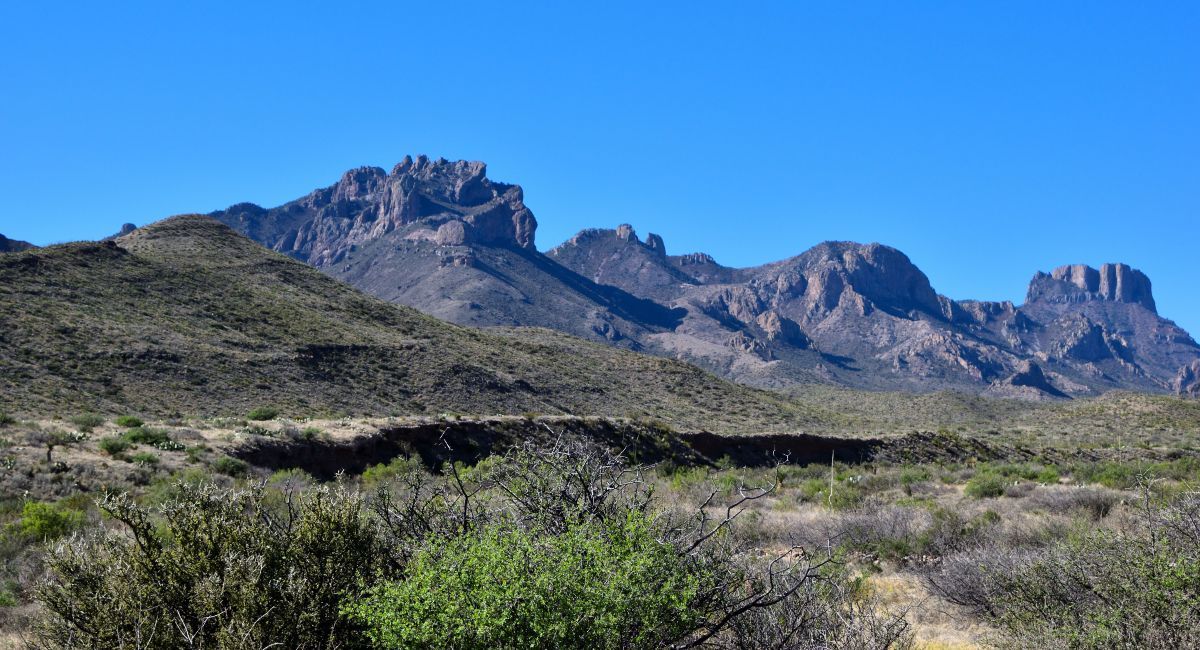
That elevation range isn't just scenic variety — it creates two completely different camping climates. Rio Grande Village at 1,850 feet bakes past 100°F all summer. Chisos Basin at 5,401 feet tops out in the low 80s. The campground you pick determines whether you need an air conditioner or a light jacket.
Big Bend became an International Dark Sky Park in 2012, and combined with neighboring Big Bend Ranch State Park, the protected dark-sky zone covers 1.1 million acres. The nearest town with a traffic light is Alpine, population 6,000, more than 100 miles away.
Entrance fee: $30 per vehicle for a 7-day pass. Big Bend is not on the 2026 nonresident surcharge list — international visitors pay the same $30 as everyone else.
Which campground should you book at Big Bend?
Big Bend has three NPS campgrounds at three different elevations, and each one works for a different rig and a different season. All cost $16 per night, all are reservable up to 180 days in advance via Recreation.gov, and none have hookups. The differences start there.
Chisos Basin Campground
Fifty-six sites at 5,401 feet, tucked inside a mountain bowl with the Chisos peaks on every side.
- Sites: 56 standard + 7 group sites (tent-only)
- Fee: $16/night (50% off with Senior/Access Pass)
- Season: Year-round
- Reservations: Up to 180 days in advance via Recreation.gov
- RV limit: Vehicles over 24 feet and trailer combinations over 20 feet not recommended — the Basin Road climbs 1,600 feet through tight switchbacks
- Amenities: Flush toilets, potable water, bear boxes, nearby camp store
- Generators: Permitted
- Elevation: 5,401 feet — summer highs in the 80s°F
The 24-foot limit at Chisos Basin isn't a suggestion. The road climbs 1,600 feet in 5 miles through a series of tight switchbacks — and the parking pad at the top is carved into a mountain bowl. Every season, we see renters who booked a 28-foot Class C and had to turn around at Basin Junction. Check your rig's length before you book your campsite.
Rio Grande Village Campground
Ninety-three sites at 1,850 feet on the desert floor, near the Rio Grande and the park's only showers.
- Sites: 93 standard + 4 group sites (tent-only)
- Fee: $16/night
- Season: Year-round (reduced capacity summer — extreme heat)
- Reservations: Up to 180 days in advance via Recreation.gov
- RV limit: 65 feet maximum
- Amenities: Flush toilets, potable water, dump station, showers and laundry at camp store (seasonal), overhead shelters
- Generators: Permitted
- Elevation: 1,850 feet — summer highs 102–107°F
Cottonwood Campground
Twenty-eight sites near the Rio Grande at the end of Ross Maxwell Scenic Drive, close to Santa Elena Canyon.
- Sites: 28 standard + 1 group site
- Fee: $16/night
- Season: November 1 through April 30 (closed May–October)
- Reservations: Up to 180 days in advance via Recreation.gov
- RV limit: 40 feet maximum
- Amenities: Vault toilets, potable water, food storage lockers
- Generators: Prohibited
- Elevation: ~2,200 feet
Cottonwood is the quietest campground in the park — no generators, no store, no showers, and no summer crowds because it's closed for half the year. If that sounds like a drawback, you haven't camped next to the Rio Grande at sunrise with nobody else around.
What no NPS campground has
No hookups. No showers at any campground (Rio Grande Village camp store has coin-operated showers nearby, seasonal). Maximum 14-day stay limit; 28 nights total per calendar year. Wood and ground fires prohibited — bring a camp stove. Bear-resistant food storage required.
Where can you get hookups at Big Bend?
Rio Grande Village RV Park
This is the only hookup option inside the park's 801,000 acres, and it's operated by Aramark — the same concessionaire that runs the Chisos Mountains Lodge.
- Sites: 25 back-in sites with full hookups (electric 50 AMP, water, sewer)
- Fee: $36–46/night (plus taxes)
- RV limit: 38 feet maximum
- Amenities: Showers, laundry, camp store, grills, picnic tables
- Season: Year-round
- Reservations: Call 855-765-1324
Twenty-five sites for 801,000 acres — the math tells you how fast these fill. Book early for winter season (November–March), which is peak visitation at Big Bend.
Outside the park
The Terlingua/Study Butte area near the western entrance has several private RV parks with hookups, most basic but functional. Maverick Ranch RV Park and Big Bend Station are the closest options with full hookups, both within 5 miles of the park entrance. If you're dry camping for the first time, spending a night at one of these before heading into the park helps you test your water and power setup.
What can you see from Big Bend's scenic drives?
Big Bend has two main paved drives, both fully RV-accessible, and each shows a different face of the park.
Ross Maxwell Scenic Drive
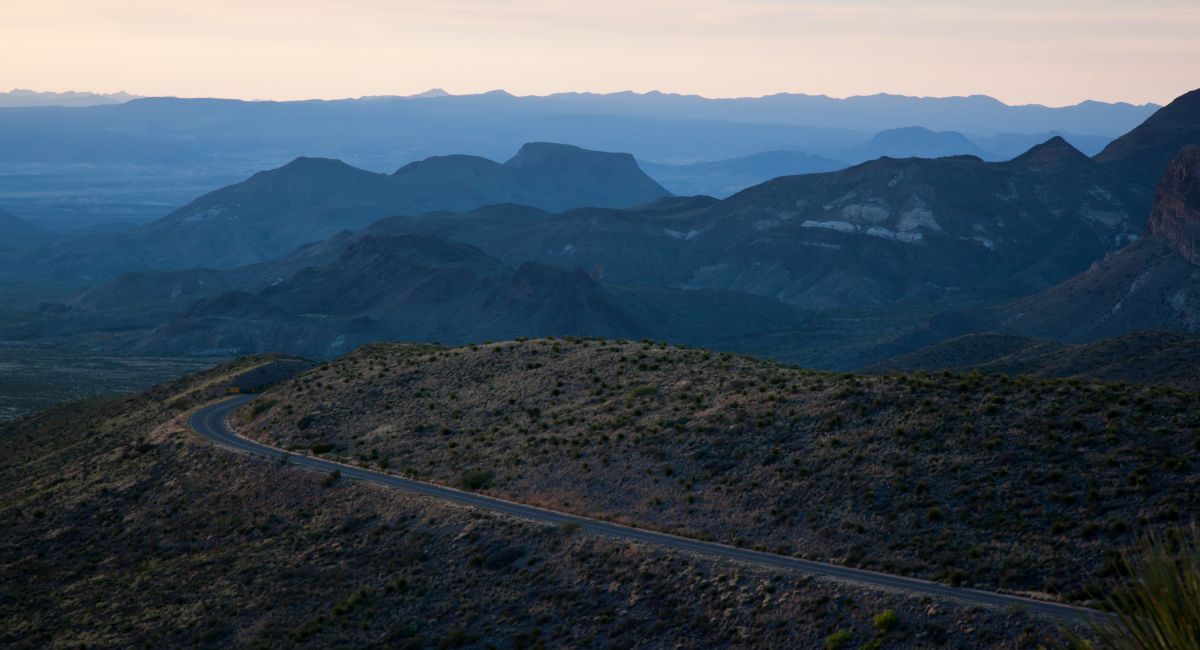
Thirty miles one-way from Santa Elena Junction to the Santa Elena Canyon trailhead — the most scenic paved route in the park. The road runs south through the Chihuahuan Desert with the Chisos Mountains filling the rearview mirror. All pulloffs are paved.
Key stops (north to south):
- Sam Nail Ranch (Mile 3) — Short walk to an abandoned homestead with a working windmill. Desert birds concentrate at the water tank.
- Sotol Vista (Mile 12) — One of the best panoramic overlooks in the park. Views across the desert to Santa Elena Canyon and into Mexico.
- Burro Mesa Pour-Off (Mile 15) — Half-mile trail to a box canyon with a dramatic desert waterfall (seasonal).
- Tuff Canyon (Mile 18) — Short trail to a volcanic ash canyon overlook.
- Castolon Historic District (Mile 22) — Early 1900s army post and trading village. Seasonal store with cold drinks.
- Santa Elena Canyon (Mile 30) — Trailhead for the 1.7-mile round-trip walk into the canyon. The Rio Grande narrows between 1,500-foot cliffs — one side Texas, the other Mexico.
Rio Grande Village Drive
Twenty miles from Panther Junction east to Rio Grande Village. Flatter, hotter, but with two stops worth the drive:
- Hot Springs — Turn off the main road onto a 2-mile dirt spur (passenger vehicles OK, not recommended for large RVs). A 105°F natural hot spring on the Rio Grande riverbank with 1930s-era ruins. The 0.75-mile trail is the most popular short hike in the park.
- Boquillas Canyon Overlook — Views into Mexico across the Rio Grande. The Boquillas border crossing (seasonal, passport required) lets you walk into the village of Boquillas del Carmen for lunch.
Why is Big Bend the darkest park in the lower 48?
Big Bend earned its International Dark Sky Park designation in 2012, and combined with Big Bend Ranch State Park next door, the protected dark-sky zone spans 1.1 million acres — the largest in North America.
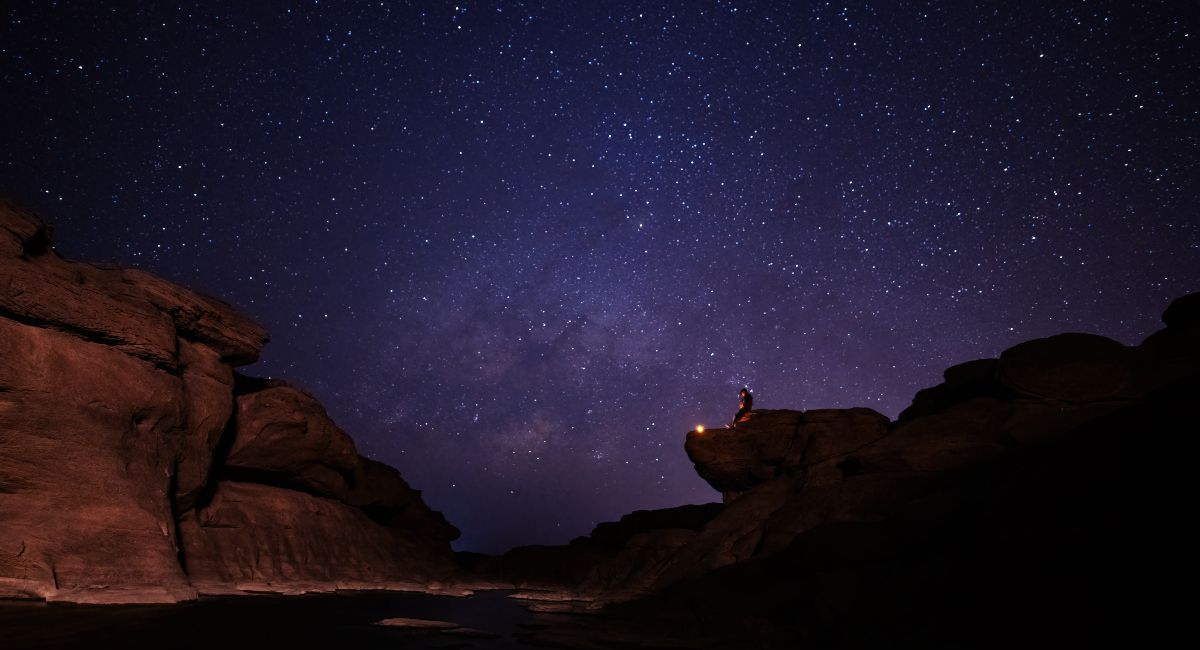
The reason is geography: there's nothing out here. The nearest city with more than 10,000 people is over 150 miles away. No light domes are visible from the park interior in any direction. On a moonless night, the Milky Way throws visible shadows on the ground, and the zodiacal light — a phenomenon most Americans have never seen — is clearly visible along the horizon.
The NPS runs ranger-led star parties and night sky programs year-round, with telescopes available for public viewing. Chisos Basin and Rio Grande Village both work for stargazing, but Chisos Basin's higher elevation puts you above more atmospheric haze.
In our trip reviews, Big Bend is the park where renters most often use the word "remote." That's not a complaint — it's the point. The isolation that makes supply planning harder is the same isolation that gives Big Bend skies you can't see anywhere else in the lower 48.
When should you visit Big Bend in an RV?
Winter (November–February)
The best season for most RV campers. Rio Grande Village highs in the 60s and 70s°F — perfect for the desert. Chisos Basin highs in the 50s and 60s°F with cold nights (30s). All three campgrounds and the RV Park are open. This is peak season — book 180 days out for weekends between Thanksgiving and Easter.
Spring (March–May)
Warm and building toward hot. March and April are the park's busiest months — spring break crowds fill every campground. Desert wildflowers bloom after wet winters. By May, Rio Grande Village temperatures push past 90°F and the heat starts driving campers up to Chisos Basin.
Summer (June–August)
Half the renters we see at Big Bend in summer don't realize that Rio Grande Village regularly hits 107°F by noon. The ones who planned for Chisos Basin have the best trip of their summer — 80°F highs at 5,400 feet while the desert floor cooks below. Cottonwood is closed. Monsoon thunderstorms July through September bring flash flood risk. Summer is the emptiest season — if you can handle the heat, you'll have the park to yourself.
Fall (September–October)
The heat breaks slowly. September still runs hot at low elevations. By October, Rio Grande Village drops back into the 80s and 90s°F. Cottonwood reopens November 1. Fewer crowds than winter and spring, but not yet cold enough to need heavy layers.
Where should you rent an RV for Big Bend?
Austin is 6.5 hours northeast via I-10 and US-385. It's the largest RV rental market in Texas and the natural starting point for a Big Bend trip — particularly if you're combining it with the best RV parks in Texas on a longer loop through the Hill Country.
San Antonio is 5.5 hours east via I-10. An hour closer, and a strong rental market in its own right. The I-10 corridor from San Antonio to Big Bend is one long stretch of West Texas emptiness — fill your gas tank and your water tank before you leave the interstate.
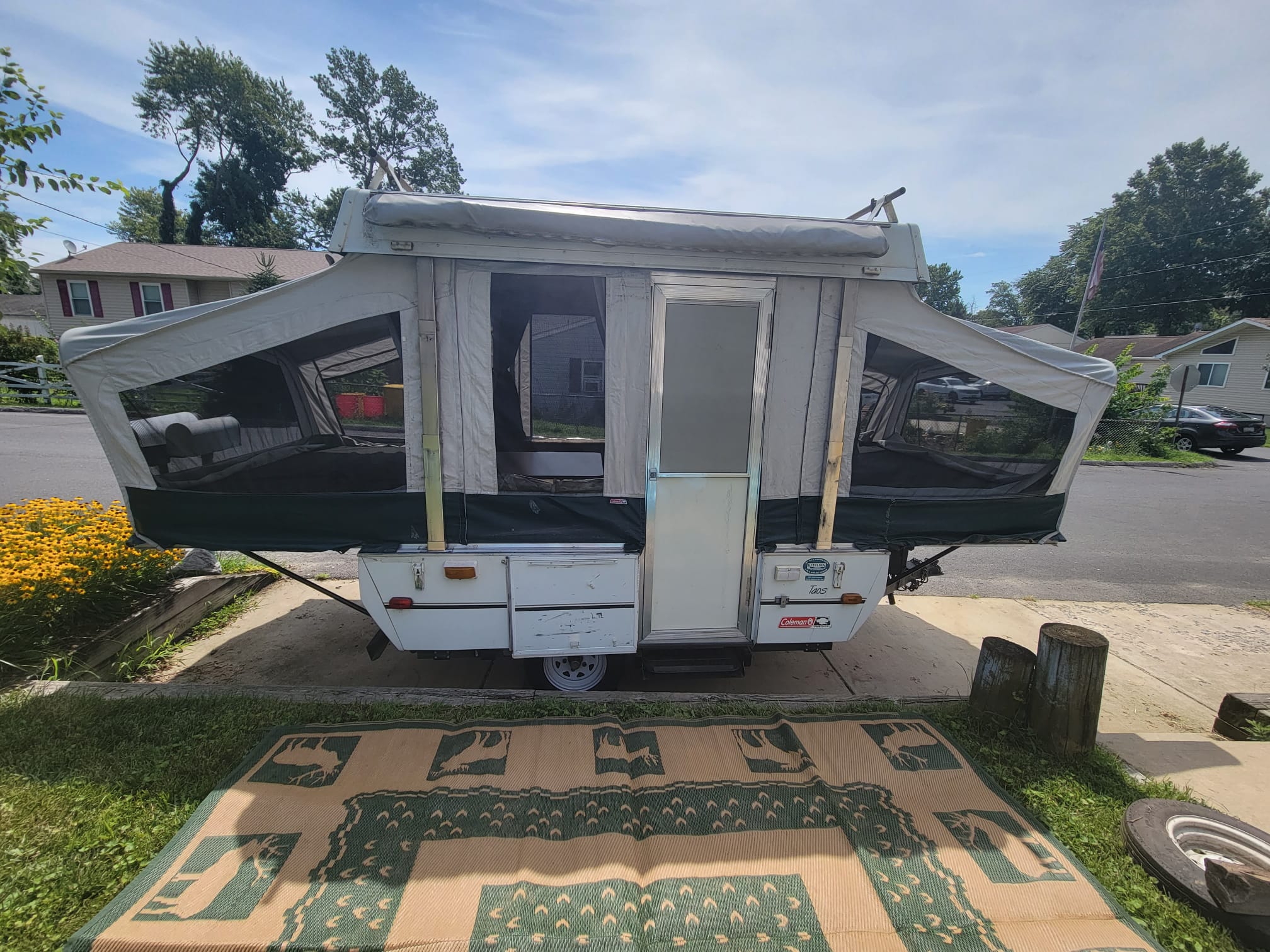
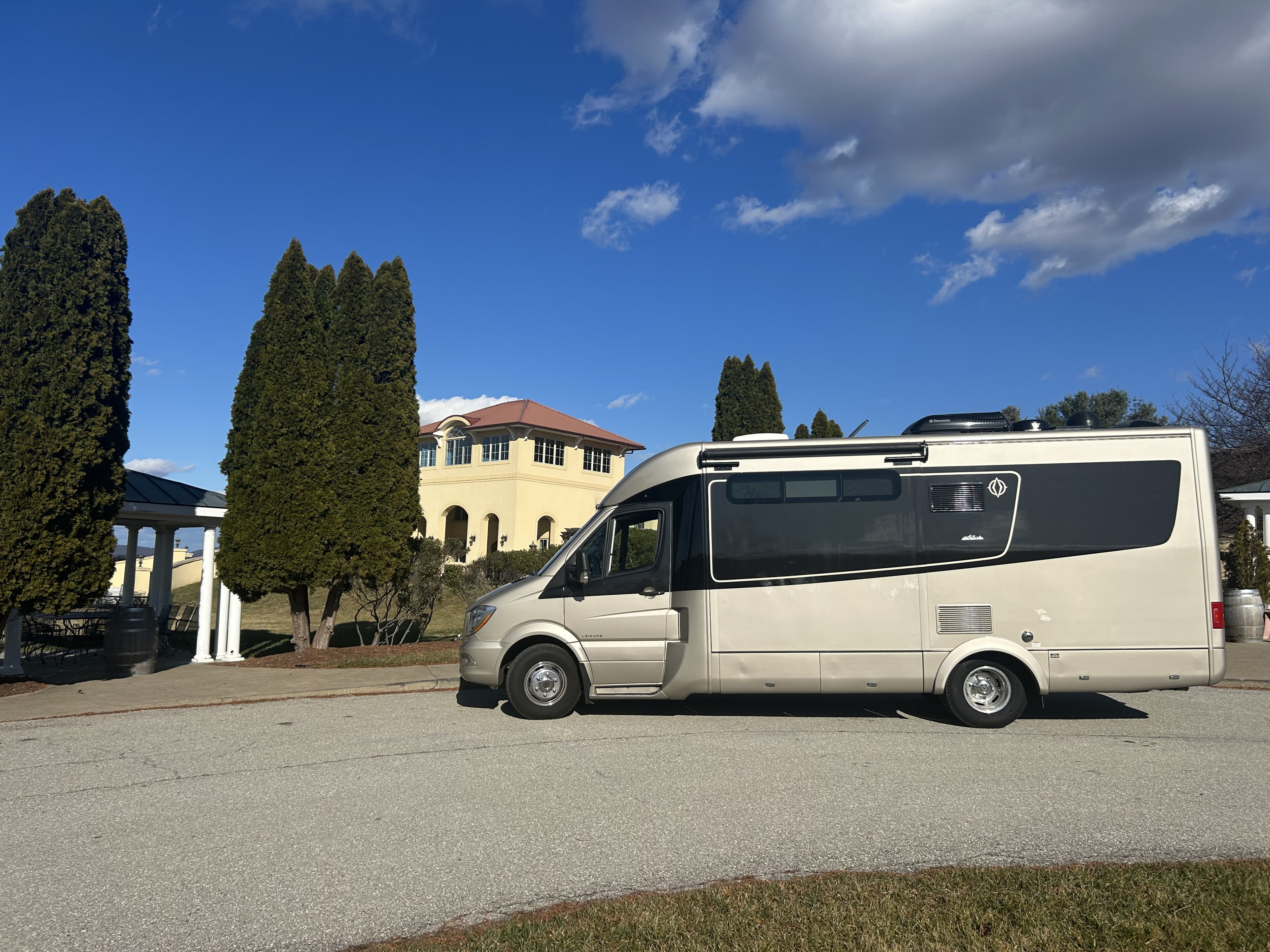
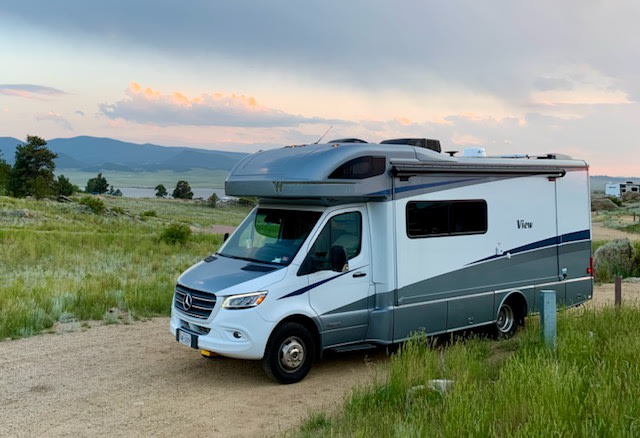
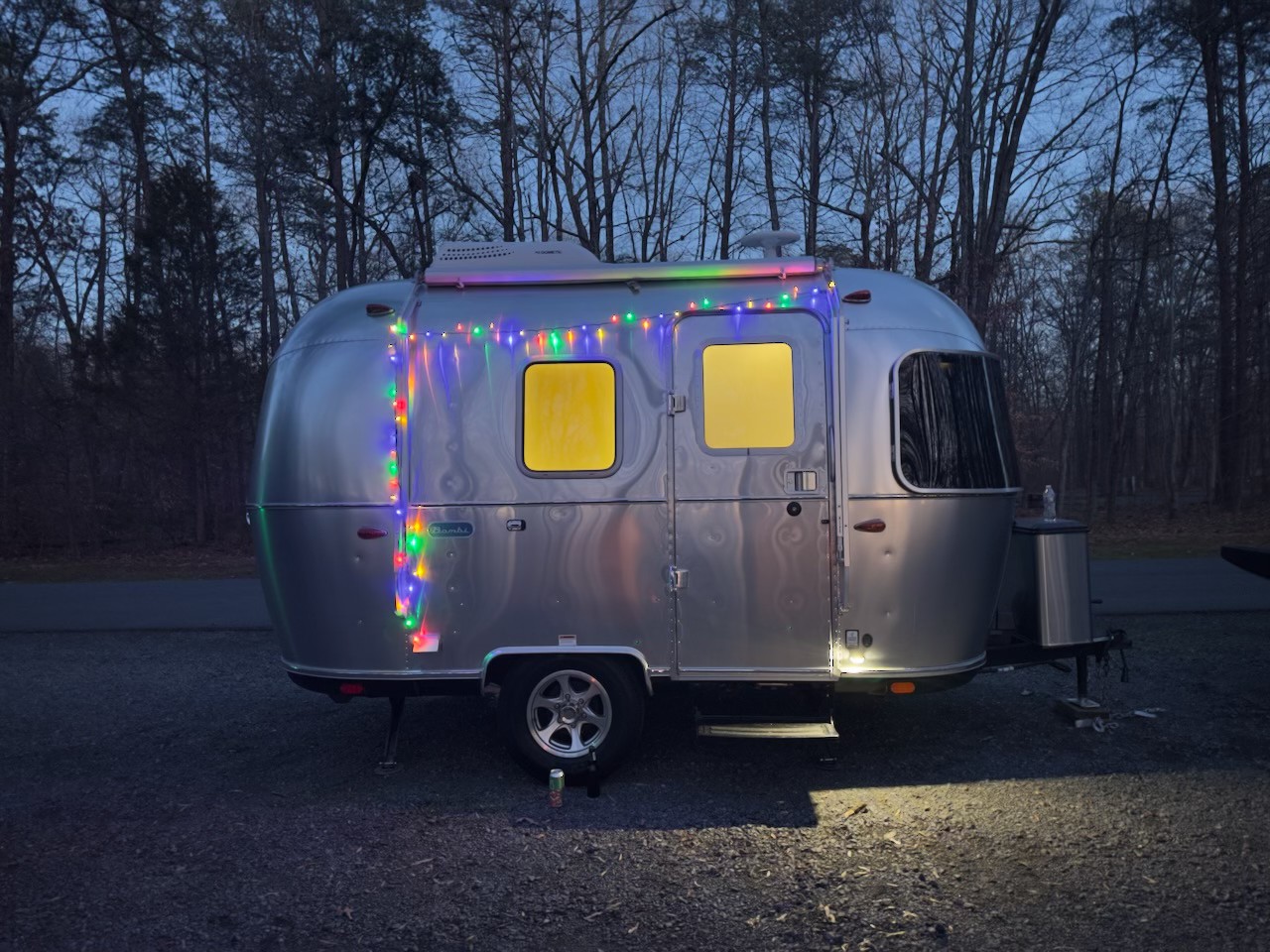
Size is the critical variable. If Chisos Basin is on your itinerary — and it should be — stay under 24 feet. A campervan or Class B fits the Basin road without stress. Rio Grande Village campground accepts rigs up to 65 feet, but the RV Park hookup sites max at 38 feet. If you're choosing a rig specifically for Big Bend with the right size for your group, smaller is better.
About this guide
This guide draws on data from the National Park Service's Big Bend camping page, the NPS Rio Grande Village RV Campground page, the NPS stargazing page, and the NPS weather page. Campground specs and fees reflect current NPS published information. Temperature data comes from NPS weather records for Rio Grande Village, Panther Junction, and Chisos Basin stations. Experiential details come from Outdoorsy's rental and booking data, including trip reviews and support team observations.