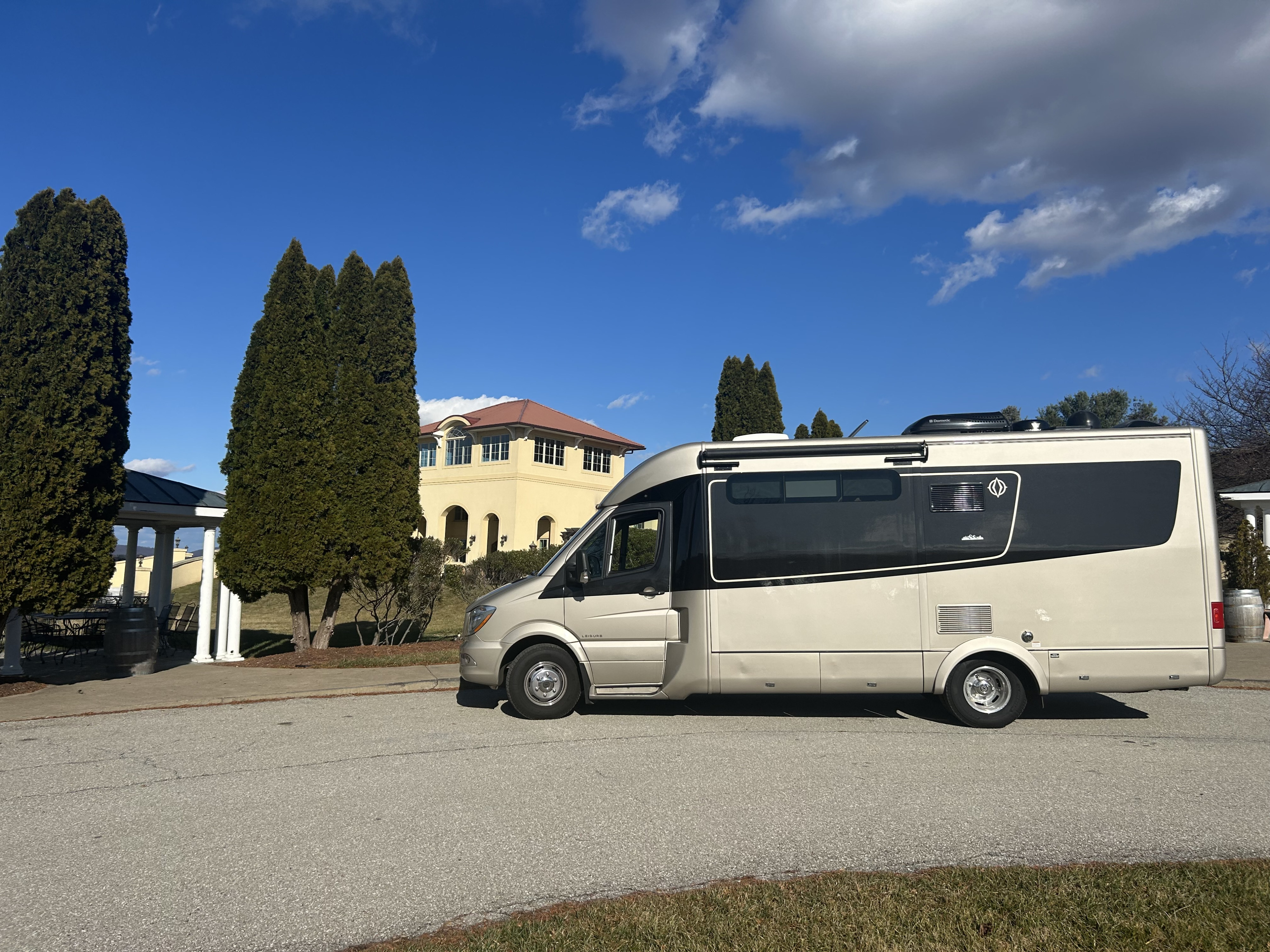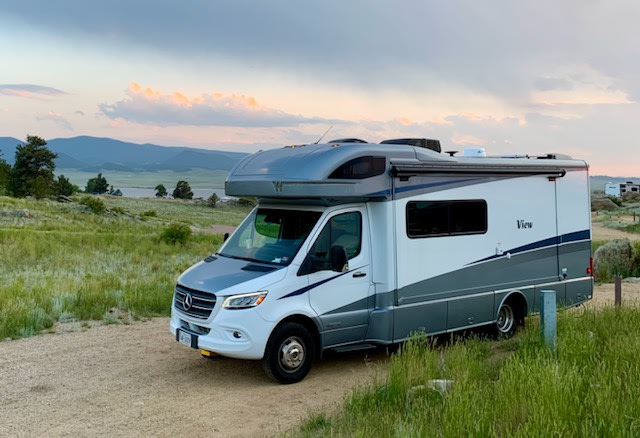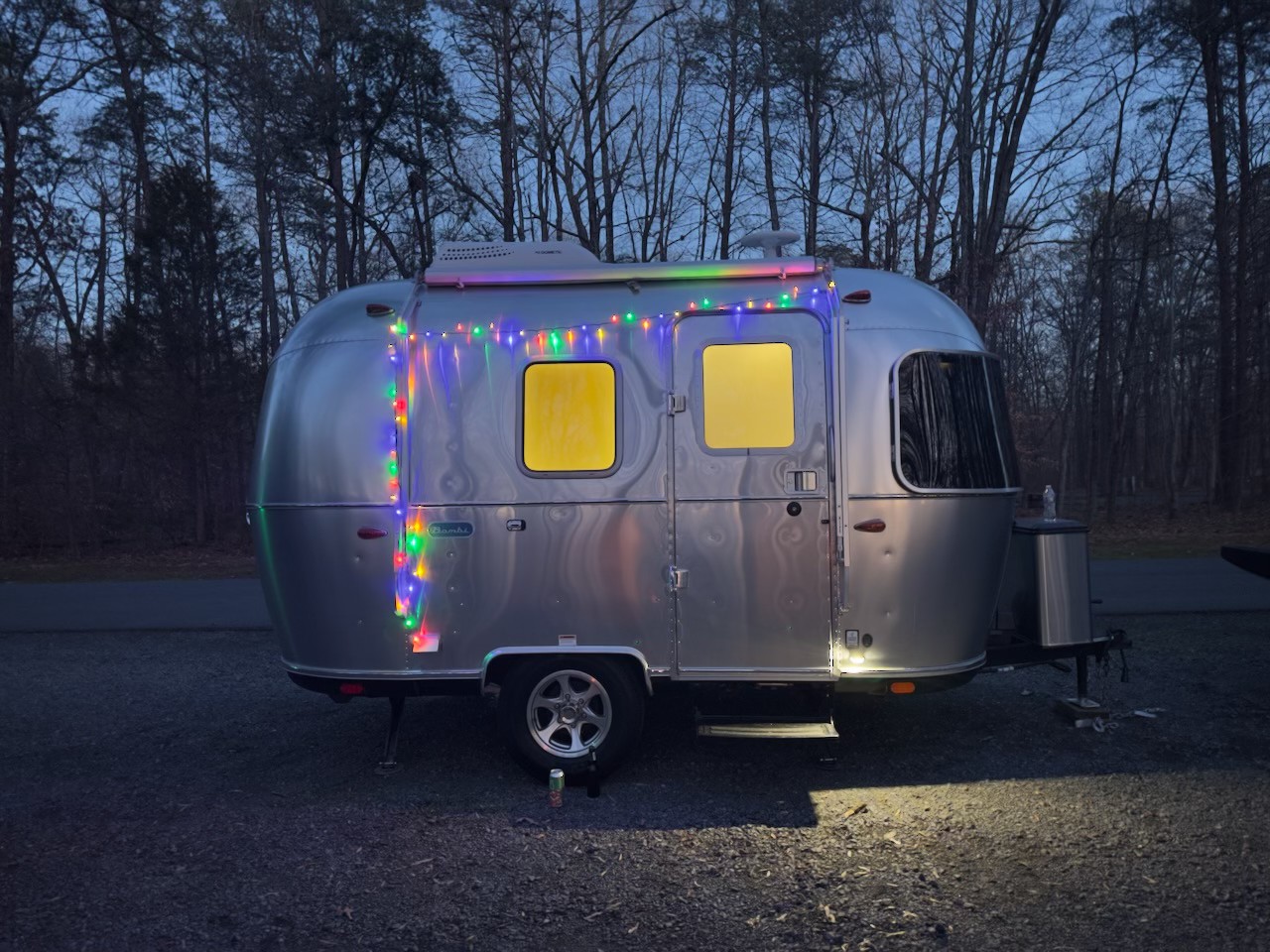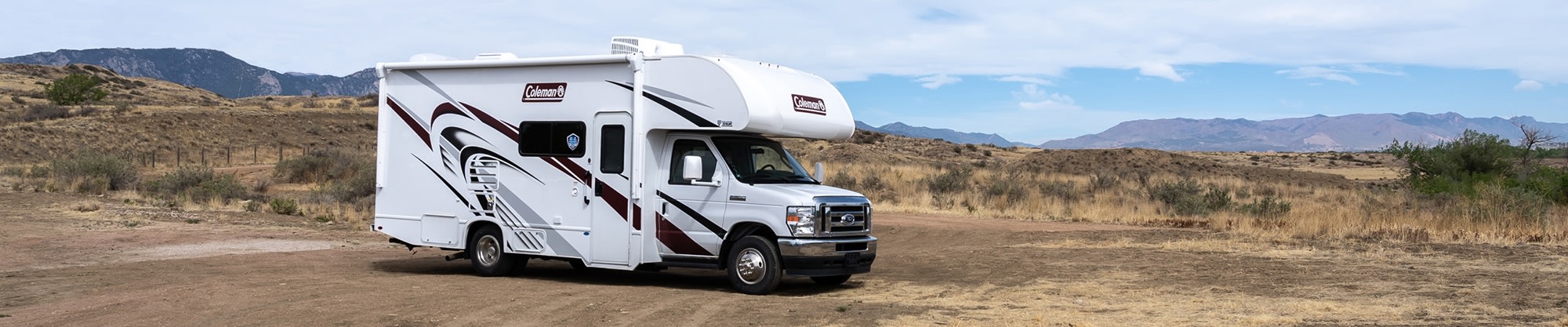


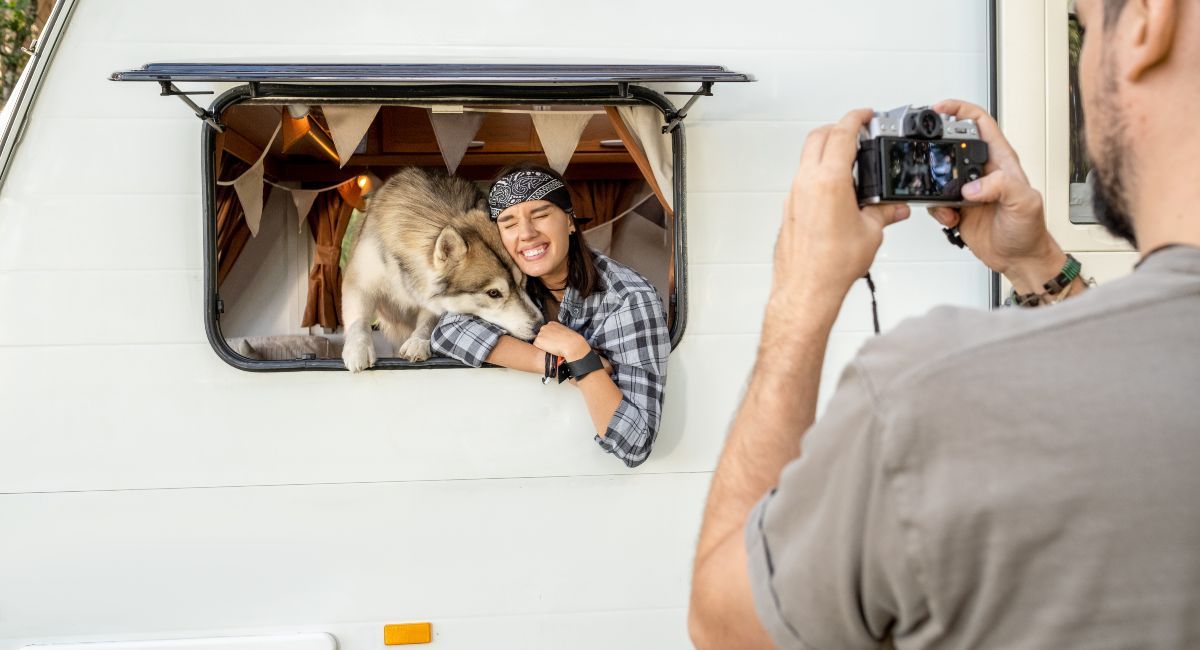


What’s the best way to see the country? Get out and RV America! You can explore from coast to coast, all at your own pace and from the comfort of your own home on wheels. Planning a trip of this magnitude can be a bit overwhelming, but in this guide, we cover everything you need to have a successful cross-country road trip.
Cross-country RV trip at a glance
- Classic routes: Route 66 runs about 2,448 miles from Chicago to Santa Monica and turns 100 in 2026. US Route 2 covers about 2,643 miles across the northern states.
- Rental cost: On Outdoorsy, nightly rates run from about 75–150 for a travel trailer to 225–400 for a Class A motorhome (May 2026).
- Fuel: US averages for the week of October 26, 2026 were $4.269 a gallon for regular and $6.352 for diesel.
- Pace: Many RVers follow the 3-3-3 rule: drive 300 miles or less, arrive by 3 p.m., and stay 3 nights.
- Park pass: The America the Beautiful pass is $80 a year for US residents and $250 for nonresidents.
Cross-country road trip routes
There are a lot of great RV routes across America. Which you choose will depend on how much time you have and the kinds of things you want to see and do.
Planning your American road trip
There are RV trip planner apps that help plan routes, estimate fuel costs, and even find campgrounds.
Some of the most popular apps are:
- Roadtrippers
- GasBuddy
- KOA RV Trip Planner
- RV Life, which now includes RV LIFE Trip Wizard
Popular RV destinations in America
When you RV America, make sure you stop at these iconic places:
- Grand Canyon National Park in Arizona — You can go rafting, hiking, or you can visit the many scenic overlooks.
- Everglades National Park in Florida — See all kinds of animals and plants as you hike, bike, and kayak around the park.
- Gila Cliff Dwellings National Monument in New Mexico — The cliff dwellings were built in the late 1200s, by people of the Mogollon Culture.
- Denali National Park in Alaska — Denali has the highest peak in North America.
- Yellowstone National Park — It is the world’s first national park and spans Wyoming, Montana, and Idaho.
Popular American highways
Certain highways are also iconic and should be included in any RV America trip:
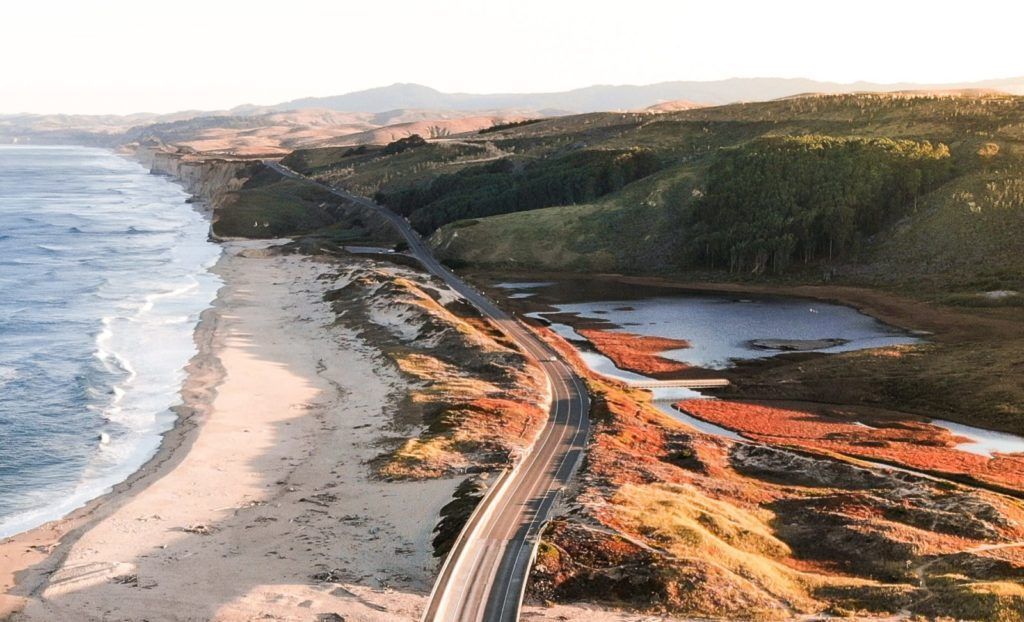
- California’s Pacific Coast Highway — It’s a popular route because there are so many great places to stop. Start at Dana Point and make your way north to San Francisco. You’ll pass fun beach towns, the city of San Luis Obispo, and the area of Big Sur. Highway 1 through Big Sur fully reopened in January 2026, but check Caltrans QuickMap before you go for closures and construction delays.
- Route 66 — It is the classic American road trip. Crossing eight states, this road trip is about 2,448 miles. Start in Chicago and head southwest to the Santa Monica Pier in Los Angeles. The route turns 100 in 2026, so see our Route 66 centennial guide for events and stops.
- US Highway 2, aka the “Great Northern” — Explore the northern states of the country from Maine to Washington. This route is about 2,643 miles and passes some incredible places, like Glacier National Park in Montana, where it runs along the park’s southern edge. Start in Maine with a side trip down the coast to Acadia National Park.
Where you camp along your cross-country road trip will obviously depend on the route you choose and how many days you plan on spending at each location. Luckily, many national and state parks have campsites within their grounds or just outside of the parks. We've heard from plenty of renters that picking one route and committing to it made the rest of the planning much easier.
How many miles a day should you drive on a cross-country RV trip?
Plan on about 300 miles or less on driving days. Many RVers use the 3-3-3 rule: drive no more than 300 miles a day, arrive by 3 p.m., and stay at least 3 nights before moving on. Some seasoned travelers stretch it to 4-4-4 (400 miles, arrive by 4 p.m., stay 4 nights).
At 300 miles a day, Route 66 alone takes at least nine driving days, before any time spent at stops. Arriving in daylight gives you time to level the rig, hook up, and find the dump station before dark. In our experience, the trips people enjoy most build in a spare day every week for weather, repairs, or a place they don't want to leave.
How to choose the best RV America rental
American RV rentals can vary greatly. Which RV you choose for your cross-country road trip will depend on how many people you’re traveling with, the amenities you want, and your budget.
Below you’ll find average rental prices per night on Outdoorsy, based on RV type, from our 2026 breakdown of RV rental costs:
- Class A motorhome: $225 to $400
- Class B motorhome (camper van): $100 to $175
- Class C motorhome: $150 to $250
- Toy hauler: $125 to $200
- Fifth wheel: $100 to $175
- Travel trailer: $75 to $150
Besides rental cost, other trip costs to consider are gas and campsite fees, both of which are affected by the type of RV you rent. For example, a large Class A Motorhome will take more to fuel up and might not fit at all campgrounds.
Some of the best RV rentals in every state can be found on Outdoorsy, so when you’re ready to RV America, you’ll have plenty of options to choose from. For example, you could rent this 2015 Ford Transit camper van outside Phoenix and drive north to the Grand Canyon. Or, if you’re on your way to the Florida Keys, you could rent this 2016 Winnebago Trend in Miami that sleeps six people. Renters we talk to who are crossing the whole country tend to pick a Class C for the mix of space and easier handling.
How much does a cross-country RV trip cost?
Fuel is the biggest cost after the rental itself. Fuel economy depends on the RV: Class A motorhomes get about 6 to 10 mpg, Class C about 10 to 15 mpg, and Class B about 18 to 25 mpg.
Here's a quick example. A 3,000-mile trip in a Class C that gets 12 mpg uses about 250 gallons, or roughly $1,070 in gas at October 2026 prices. A diesel Class A getting 8 mpg would use about 375 gallons, or close to $2,400.
Campgrounds come next. The average RV site cost $73.20 a night in June 2026, and public campgrounds averaged $34.12. Add food, park passes, propane, tolls, and a cushion for surprises. Check the rental listing for extra fees too, like mileage over the included cap, generator hours, cleaning, and taxes. We've heard from renters who budgeted only for the nightly rate and fuel that campsites ended up surprising them most.
How to save money when you RV America
There’s no question that an RV America rental will save you money compared to staying in multiple hotels. However, costs during a cross-country road trip will still add up. The good thing is that there are ways to save money.
Boondock
One way to save money on your trip is to boondock. But what is boondocking? It is when RVers stay in free places without amenities such as sewer, water, or electric hookups. This can be on public land, at RV-friendly businesses like Walmart, or even in a friend’s driveway. On Bureau of Land Management land, dispersed camping is generally limited to 14 days in any 28-day period. At stores, overnight parking is up to each store and local rules, so ask the manager first and follow our tips for overnighting at Walmart.
Join RV discount clubs
Another way to save money on your cross-country road trip is to join an RV discount club. How does it work? You pay a yearly membership fee and the club promotes a select network of RV parks for you to stay in, which will offer you a discount on your stay. There are different clubs out there, each with their own pros and cons, so make sure you do some research before deciding on one.
Pack what you’ll need
The last thing you want to spend money on is something you already have but left at home. That’s why having an RV essentials checklist is so important. Head out to RV America confidently knowing you have everything from toothpaste to jumper cables.
Of course, some of what you pack will depend on your RV type. For example, if you don’t have a bathroom, you want to make sure your packing list includes wet wipes, dry shampoo, and portable toilet waste bags that you pack out and throw away in the trash.
If you’re boondocking, remember to pack plenty of extra water for cooking, cleaning, and brushing your teeth.
Cook your own RV meals
Eating out every day is not good for your wallet (or your jeans), so try cooking most of your own meals. You may have to get creative with cooking and storing food in smaller RVs, but it is possible. You can pack a cooler, portable grill, and dry goods that don’t require refrigeration like pasta, rice, crackers, pretzels, and nuts. We've seen a simple weekly grocery stop do more for a trip budget than any discount club.
Buy a National or State Park Pass
If you plan on visiting multiple National Parks and Federal Recreational Lands, it’s a good idea to purchase an America the Beautiful annual pass. They cost $80 a year for US citizens and residents and cover entrance fees at national parks and national wildlife refuges as well as standard amenity fees (day use fees) at national forests and grasslands, and at lands managed by the Bureau of Land Management, Bureau of Reclamation, and U.S. Army Corps of Engineers.
Since January 1, 2026, the annual pass costs $250 for nonresidents. Nonresidents 16 and older without an annual pass also pay an extra $100 per person at 11 of the busiest parks, and fee-free days now apply to US residents only. US residents 62 and older can buy a Senior Pass for $80 (lifetime) or $20 (annual).
States have their own state park passes. Costs vary by state, but they are well worth the purchase.
What should you book first on a cross-country RV trip?
Lock in campsites and entry permits at the busiest parks before anything else, then fill in the easier stops around them. A few 2026 changes matter for RVers:
- Grand Canyon: Trailer Village, the South Rim's RV park, is closed until further notice, and Mather Campground is dry camping only because of Stage 4 water restrictions. On the other side of the canyon, the North Rim Campground reopened on June 1, 2026, for the first time since the 2025 Dragon Bravo Fire, but it has now closed for the 2026 season. Arrive with full fresh water tanks, or plan to camp outside the park.
- Rocky Mountain: Timed entry permits were required from 9 a.m. to 2 p.m., May 22 to October 12, 2026. Check the 2027 dates before you plan a summer visit.
Park conditions change quickly, so check each park's website a week before you arrive and again the day before. We've watched travelers save a whole leg of a trip just by checking a park's alerts page before they left the last town with groceries.
The best RV insurance for your cross-country road trip
A cross-country RV road trip is the ultimate way to experience America’s natural wonders at your own pace. From the jagged coastline of California to the sprawling plains of the Midwest, you’ll be putting thousands of miles on your rig. While you’re focusing on the journey, it’s easy to overlook a crucial piece of the puzzle: protecting your vehicle for the long haul.
If you’re renting through Outdoorsy, you’ll choose a protection package when you book. If you own your RV, you need a partner who understands the road as well as you do. That’s why you should look for the best RV insurance from a company built by RVers, for RVers.
Roamly offers customizable policies that cover you where it matters most, from damage in a collision to emergency expenses if you break down far from home. Roamly’s policies can even provide coverage for personal effects, so your gear is protected no matter where you are. With Roamly, you can hit the road knowing your adventure is fully backed by peace of mind.
Ready to RV America?
We hope this guide has gotten you excited for your next cross-country road trip. Once you rent an RV, head out and see the many natural wonders that the country has to offer. From mountains to deserts and beaches to forests, America has it all.
About this guide
Originally written by Outdoorsy author Vicky Sosa. Updated in November 2026 by the Outdoorsy Editorial team. The facts in this guide were checked against official and primary sources, which are linked throughout. Prices and park conditions change, so check them before you go.